Entry · Ref OHSQ6_E3
Era Pickleball coaching: Leadership on the Court
- Posted
- 2026-09-30
- Last amended
- 2026-09-30
- Account
- @emilioamqs843
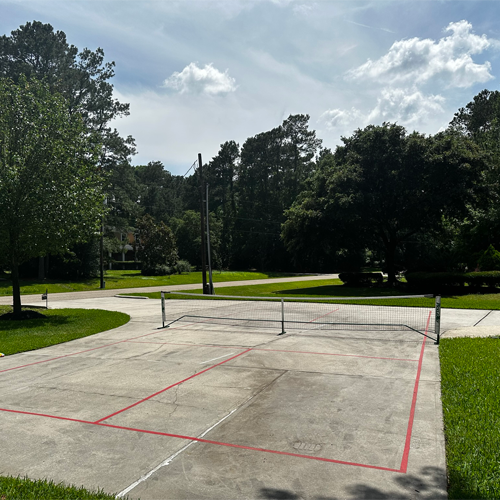
On a sunlit third court at a community center, the ball arcs in a high, lazy arc before landing with a crisp pop. The players form a small semicircle around the net, eyes bright with focus, shoulders angled toward the center of action. In that moment, coaching isn’t just about technique or drills. It’s about leadership—the steady hand that translates individual skill into team rhythm, the calm voice that steadies nerves during a crucial rally, the strategic mind that sees beyond the present point to the flow of the game. This is the heart of Era Pickleball coaching. It blends performance science, practical experience, and a distinctive leadership ethos that makes players faster, smarter, and more confident on the court.
The Era Pickleball approach doesn’t treat coaching as a one-size-fits-all program. It starts with a clear sense of purpose, then builds a culture of accountability, curiosity, and collaborative problem solving. You can feel this ethos in the way sessions are structured, in the language coaches use, and in the quiet moments after a blistering rally when a player’s shoulders relax and expectations snap back into perspective. It’s not just about getting the ball over the net; it’s about shaping a mindset that elevates performance under pressure while preserving the joy of the game.
A coaching culture worth building starts with leadership that players can trust. In practice, that means showing up consistently, listening deeply, and making decisions that prioritize growth over ego. At Era Pickleball, coaches are trained to lead with three interlocking commitments: clarity, collaboration, and accountability. Clarity means the plan is explicit enough that every player knows what success looks like in a given drill or match scenario. Collaboration asks players to contribute to problem solving, to articulate their own observations, and to test ideas in a supportive environment. Accountability ensures progress is real and measurable, with feedback that is specific, timely, and constructive. When those elements align, the court becomes a laboratory for development where every point teaches a lesson.
A culture of leadership begins even before the warmup. It begins with the way a coach frames the session, how they introduce the day’s objectives, and the standards they model with their own practice. In my own coaching career, I learned early that the most meaningful breakthroughs occurred not during a dramatic drill but in the moments when I asked players to reflect on what they did well and what they could do better. The best leaders on the court are not the loudest voices; they are the ones who create space for others to shine, who notice the quiet adjustments that make a big difference, and who insist on process over payoff when the process yields growth rather than immediate results.
Leadership on the court also relies on a nuanced understanding of how people learn. Players come with different backgrounds, a variety of physical attributes, and unique nervous systems. Some respond to meticulous drill work, others learn faster through live play and feedback. A proficient Era Pickleball coach tunes to these differences without sacrificing the coherence of the group. The result is a learning environment that feels personalized yet collectively aligned. It’s a blend of art and science: scouting the learner, calibrating the challenge, and delivering feedback that travels with the next rally rather than as a distant critique.
The core of leadership in pickleball coaching is a relentless focus on decision making. Every point is a sequence of decisions under pressure, from shot selection to movement choices and communication with a partner. An effective coach helps players catalog their decision options, compare outcomes, and rehearse high-leverage choices. The moment of decision can be swift, sometimes too quick to allow long deliberation. That is precisely where a coach’s guidance matters most. By helping players recognize patterns, anticipate responses from opponents, and adjust tactics in real time, the coach becomes a facilitator of smarter play and deeper understanding.
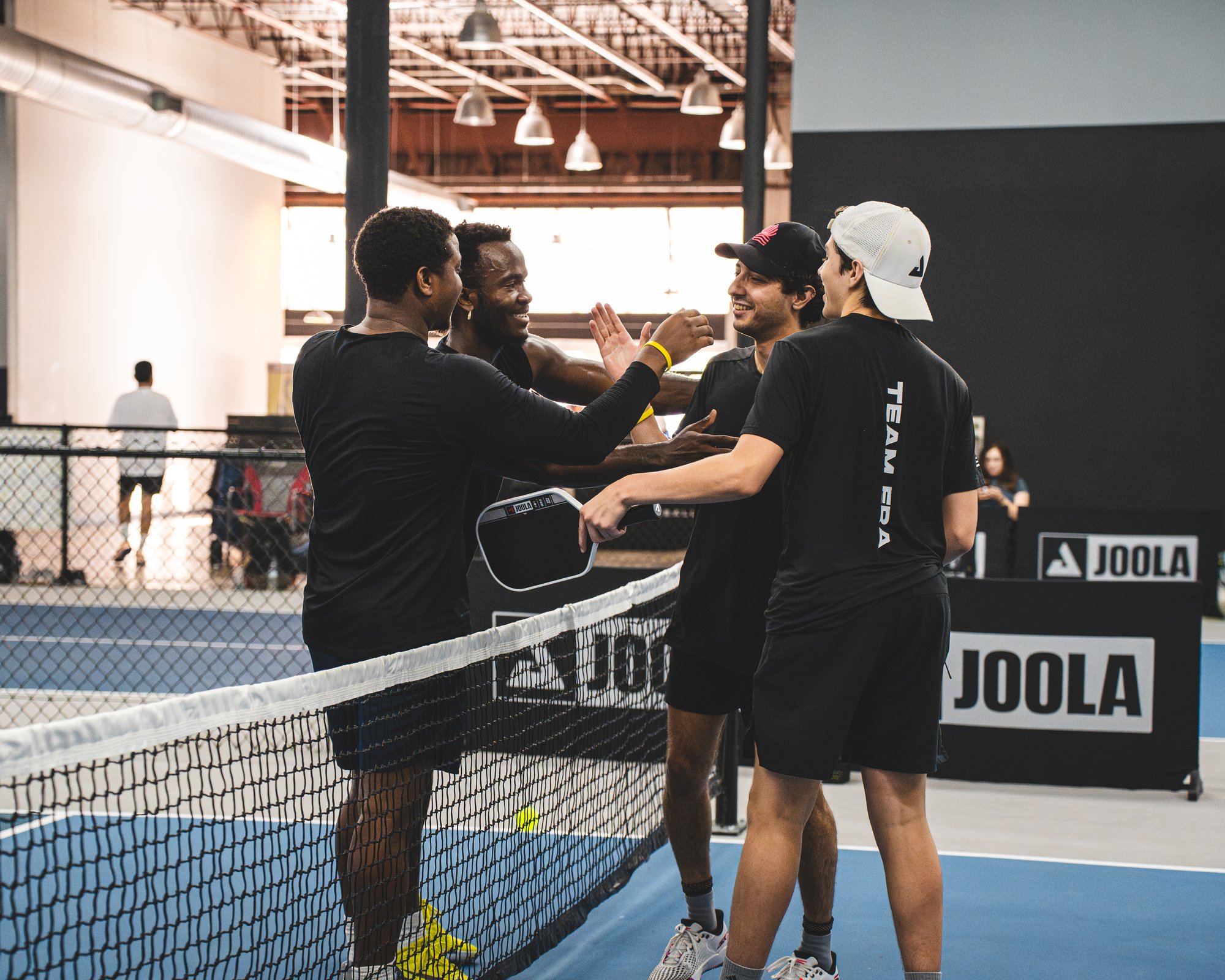
To illustrate, think about a typical Era Pickleball coaching session devoted to net play. The central question isn’t simply how to volley with authority, but how to establish a leadership dynamic within a duo that maximizes coverage and minimizes confusion. In a well-run session, players practice communication that feels almost telepathic in its efficiency. They learn to anticipate each other’s moves, to distribute responsibility for certain zones, and to step in with a decisive call when miscommunication arises. The coach’s role is to create an environment where this harmony is possible, to model calm assertiveness, and to intervene with precise, timely feedback when misreads threaten to derail a rally.
Another pillar of Era Pickleball leadership is creating psychological safety on the court. Players should feel comfortable trying new shots, experimenting with different formations, and admitting when something isn’t working. That requires a culture that values experimentation over flawless execution. A good coach foregrounds risk management and reframes mistakes as data. If a rally ends abruptly because a player misjudged pace, the coach doesn’t pile on. Instead they guide the group through a quick post-rally debrief that disentangles the technical misread from the emotional reaction, then shifts the focus to a corrective, actionable adjustment.
Leadership on the court is also about modeling resilience. Pickleball is fast and unforgiving; points can swing on the thinnest margins. Coaches who consistently display composure during adverse rallies teach players to regulate their arousal, to manage frustration, and to maintain movement quality even when outcomes aren’t favorable. This is not about suppressing emotion but about directing energy purposefully. A seasoned Era Pickleball coach can turn a lost point into a teaching moment and a momentum shift into a momentum retuning rather than a corrosive defeat.
A practical framework emerges from these ideas, built around three anchor practices that can be woven into any Era Pickleball pickleball training session. The first is a preflight plan that orients the group to the day’s aims before the first ball is struck. The second is interpersonal leadership, a focus on how players speak to one another and how they distribute responsibility on the court. The third is post point reflection, a lean, targeted debrief that turns experience into explicit learning.
Preflight planning is more than a list of drills. It is a narrative about how the session will unfold, what the players should feel as they move through different segments, and what indicators will signal progress. A coach who leads with this kind of planning signals that growth is not accidental. It invites players to invest in the day, to bring curiosity, and to hold themselves accountable for showing up with intent. In practice, a preflight plan might begin with a short warmup that primes specific movement patterns, followed by a quick assessment of players’ energy levels and readiness. Then comes a targeting phase where the coach communicates the focal points of the session—whether it is controlling the kitchen, improving cross-court transitions, or sharpening backend drives. The plan is simple but precise, leaving space for players to adapt on the fly as conditions change.
Interpersonal leadership centers on how players relate to one another and how the group functions as a system. On the court, communication is the glue that keeps teams cohesive. Coaches cultivate language that is direct yet respectful, precise without being punitive. They teach shorthand calls that reflect shared understanding, such as a crisp signal when one player takes over the poaching role, or a quick verbal cue to reset after a miscommunication. This culture of communication extends beyond the court’s lines into the locker room and practice area, where peers support one another’s growth. The coach’s job is to facilitate this culture, to intervene when voices rise in frustration, and to model the kind of collaborative problem solving that builds trust.
Post point reflection is where learning solidifies. The idea is not to replay failure in excruciating detail but to extract the lesson and move forward with a concrete plan. Some coaches prefer a structured debrief with a short checklist, others favor a more open dialogue that allows players to express what they observed and felt. Either approach should end with a clear, actionable takeaway for the next rally. The aim is to keep the learning tempo high while avoiding cognitive overload. In a typical Era Pickleball class, this might look like three quick questions posed to the group: What happened, why did it happen, and what will we do differently next time? The coaching language here matters because it shapes how players internalize the experience. If the tone is constructive and forward looking, the session closes with momentum rather than residue.
The leadership frame also has to account for the practical realities of growing players at different levels of experience. In many pickleball communities, classes attract a mix of newcomers, intermediate players, and a few advanced athletes. A strong Era Pickleball coach tailors the same session to accommodate this range without diluting the core objectives. One method is to stage parallel focus areas within the same session. For example, while some players work on serve-and-volley coordination near the net, others drill crosscourt reset patterns from the baseline. The coach circulates, offering micro-adjustments that are specific to each player’s biomechanics and decision patterns. It’s a dynamic balance, and the best instructors learn to move with it rather than push a single plan through no matter what.
Leadership on the court also means recognizing and nurturing leadership in players themselves. The most resilient teams are those where players step into leadership roles at different moments. A player who calls out correct positioning during a tense rally, another who coaches a partner through a technical adjustment, and a third who keeps the mood focused and positive—these small acts cumulatively boost the group’s performance. Coaches at Era Pickleball actively cultivate opportunities for players to assume responsibility. They might designate a rotating captain for a session to lead warmups, to manage prepoint rituals, or to facilitate the post point discussion. The result is a cultivated sense of ownership that travels beyond the gym into league play and casual weekend matches.
A telling example from a recent season illustrates the impact of leadership on the court. In a midseason drill block focused on transition play, a veteran player who had started as a defensive anchor began to lead by example. She started a simple ritual: after every crosscourt exchange, she would pause briefly, acknowledge the good reads her partner had made, and then point to one area where they could improve—never scolding, always coaching. The effect rippled through the court. New players felt safer to experiment, and the team began to execute more deliberate, less reactionary transitions. The coach’s role was to notice the shift, reinforce it with praise, and keep the overall session aligned with its strategic aims. Outcomes improved in a matter of weeks, with fewer unforced errors and more confident net play under pressure.
There is no shortage of trade-offs in building an effective leadership program on the court. The first is time versus speed. A strong culture takes time to develop, but players also crave quick wins. Coaches balance this by weaving fast feedback loops into every drill while preserving longer-term plans that emphasize technical foundation and decision making. A fleeting win can be satisfying, but sustainable growth depends on careful sequencing of skill acquisition, tactical understanding, and mental resilience.
Another tension centers on competition versus collaboration. Some players learn best through intense drills that simulate match stakes, while others thrive when the emphasis is on cooperative problem solving. A mature Era Pickleball coaching approach blends both modes, alternating blocks that emphasize individual competence with group tasks that require shared strategy. The net effect is a more versatile player who can switch gears depending on the environment, a critical trait in a sport that rewards adaptability as much as raw skill.
A third set of edge cases arises when working with players who have physical limitations or injuries. Coaching leadership in this context requires heightened attention to safety, scaling of drills, and reinforced emphasis on mobility and recovery. It also means recognizing when a participant’s long-term well-being will be better served by stepping back from high-intensity work, even if that means delaying certain progress. The Era Pickleball coaching philosophy treats these situations with care, offering modified drills and alternative avenues for skill development that respect the body while preserving the essence of leadership on the court.
To translate these principles into practical results, many Era Pickleball classes emphasize a few core competencies that become the thread running through every session. These include court awareness, shot selection discipline, partner communication, and adaptive movement. Court awareness is not simply about knowing where the ball is; it’s about anticipating trajectories, reading opponents’ intent, and adjusting positioning with a few decisive steps. Shot selection discipline refers to the ability to weigh risk and reward in real time and to avoid overreaching or forcing low-probability plays. Partner communication is the glue that holds the unit together, and adaptive movement is the capacity to alter the tempo and geometry of play in response to changing conditions such as wind, lighting, or a shifting point count.
A notable feature of the Era Pickleball coaching model is its emphasis on practical feedback loops that players can carry into their daily practice and informal matches. The coaching staff tends to favor concise, specific feedback that players can act on immediately. Instead of broad statements like “be more aggressive,” a thoughtful coach will offer: “steer your weight forward on that backhand drive and commit to the follow-through.” That kind of precision matters because it anchors the learning in physical sensation and end-effect outcomes, not just abstract improvement.
As players progress from beginners to more experienced competitors, leadership naturally evolves. New players often require more explicit instructions, but they still benefit from opportunities to practice leadership roles in small ways. For instance, under supervision a beginner might lead the team warmup or manage a rotating station in a drill block. Experienced players, meanwhile, can take on more sophisticated leadership responsibilities, such as leading a tactical stretch at the start of a session, orchestrating a partner drill, or guiding a mini scrimmage where the goal is to test a particular strategy.
The value proposition of Era Pickleball pickleball coaching, in the end, is not just improved technique. It’s the cultivation of a leadership habit that translates to confidence on the court and, often, a more satisfying playing experience off it. When players believe their coach sees them as capable, when they trust the plan, and when they feel their voice matters in the group, they walk onto the court with a different posture. They stand taller, move with more assurance, and engage with the sport in a way that is humane, practical, and enduring.
For many players, the moment the coaching strategy truly clicks is when they recognize that the game is a constant negotiation of effort, space, and attention. It is not about conquering the other team so much as aligning one’s own choices with the terrain of the court and the behavior of teammates. When players internalize this, they begin to improvise with intention rather than reaction. They learn to read the table of possibilities in front of them and to commit to decisions with clean, minimal extraneous motion. That is leadership at its most Era Pickleball refined on the pickleball court.
The following two lists capture recurring themes that appear in successful Era Pickleball coaching programs. They serve as compact reference points for players and coaches who want to cultivate leadership without overloading the session with theory.
-
Core leadership behaviors you will see on the court:
-
Clear, direct communication that remains respectful under pressure
-
Consistent accountability paired with supportive feedback
-
Proactive problem solving that invites participation from teammates
-
Calmnes and presence during high-stakes points
-
Rituals that build trust and predictability across drills
-
Practical anchors for coaching practice:
-
A deliberate preflight plan that sets expectations and metrics
-
A structured debrief after each rally or drill block
-
Scalable drills that accommodate mixed skill levels without losing focus
-
Roles and rotating leadership opportunities that empower players
-
Safe, inclusive coaching that respects injuries and individual limits
These lists are not a blueprint to be followed rigidly. They are touchstones that help keep a coaching session aligned with the larger aim: to develop athletes who can lead themselves and others with clarity and care. A well-run Era Pickleball class uses them as quick reference points while the day’s activities unfold with spontaneity. The best sessions feel unscripted in moments while still containing a coherent throughline that keeps everyone moving toward shared objectives.
Beyond technique and tactics, the leadership dimension of Era Pickleball coaching cultivates a particular ethos. It asks coaches to be curious about their players, to resist the temptation to default to easy answers, and to create a learning environment that feels safe enough for experimentation yet rigorous enough to yield measurable progress. It recognizes that leadership on the court is not a single attribute but a tapestry of behaviors—attention to detail, respect for teammates, willingness to adjust, and a quiet confidence that the group’s success matters more than any single performance.
This approach also acknowledges limitations and edge cases. There are days when players arrive with fatigue, when a court is crowded, or when a shift in focus is necessary due to upcoming events or tournaments. In these cases, the ability to adapt leadership tactics quickly becomes a testament to the coach’s skill. The most effective Era Pickleball coaches can recalibrate within minutes, reframe objectives, and re-engage their players with the same sense of purpose. The court becomes a living organism, and leadership is the organ that keeps it alive.
In the end, leadership on the court is inseparable from the sport itself. Pickleball rewards clarity of intent, precise execution, and the kind of teamwork that emerges when players trust each other and trust their coach. Era Pickleball coaching embodies these ideals by building sessions that interweave skill development with leadership practice, making the sport more than a sequence of drills and more than a test of reflexes. It becomes a practice in leadership, a discipline that teaches players how to navigate uncertainty with composure, how to communicate with purpose, and how to pursue progress with resilience.
For coaches, the payoff is a durable culture. When a class coalesces around a shared frame of reference, the players carry that frame into league play, into social matches, into daily practice sessions at home, and even into how they talk about the sport with friends. They begin to articulate the reasons behind their decisions, they start to value patience as a strategic tool, and they learn to appreciate small gains as the building blocks of mastery. The result is a community that looks forward to practice not as obligation but as an opportunity to grow together—a community where leadership on the court translates into leadership in life.
If you are exploring pickleball classes Era Pickleball offers, you might ask a few practical questions to understand how this leadership approach translates into your own development. What are the daily objectives of the session? How does the coach balance individual instruction with group dynamics? What does the post session debrief look like, and how is feedback delivered? How is safety integrated into drills, particularly for players returning from injury or dealing with limited mobility? These questions reflect a broader desire to invest in a coaching program that respects the complexity of learning and the value of thoughtful leadership.
The eras of coaching you encounter in pickleball are often defined by the people who show up, the questions they ask, and the standards they set for themselves. A coaching model grounded in leadership invites players to become architects of their own improvement. It invites them to recognize that improvement is not a solitary climb but a collaborative ascent, aided by coaches who orchestrate the environment, elevate the conversation, and insist on accountability without erasing the joy of play.
In a world where weekday routines press in and weekend commitments multiply, the right pickleball class can feel like a rare sanctuary. It is a place where movement, strategy, and social connection intersect, where leadership is not a pedestal but a practice that grows with repetition, reflection, and shared ambition. Era Pickleball coaching aims to honor that space by delivering sessions that are as practical as they are aspirational, as disciplined as they are generous, and as demanding as they are human.
If you’re considering enrolling in pickleball training with Era Pickleball, or you’re a coach seeking to infuse your programs with a leadership ethos, the core message is simple. Lead with clarity, invite collaboration, and hold space for accountability. The court is a stage where every rally offers a chance to practice being a better leader, a better teammate, and a better human. The results rarely come all at once, but with patient consistency you can witness a transformation that extends beyond the lines and into the rhythm of daily life.
The game will always test you—speed, strategy, and nerve combined in a compact oval of motion. A good coach makes that test feel like an invitation rather than a verdict. They stand beside you, not in front of you, and they guide you toward answers you discover yourself. That is leadership on the court, and it is what Era Pickleball coaching strives to deliver with every class, every drill, and every rally.