Entry · Ref 1_RNYUON
Pickleball Center erapickleball.com: Coaching Tracks
- Posted
- 2026-09-30
- Last amended
- 2026-09-30
- Account
- @emilioamqs843
The world of pickleball is crowded with quick fixes and flashy claims, but in the lanes that actually move players forward, coaching tracks matter more than any single drill or new paddle tech. Era Pickleball has built a structure that respects the realities of growth, from the beginner who learns to rally to the seasoned competitor chasing regional titles. The coaching tracks at erapickleball.com are not a one size fits all proposition. They are a woven system designed to meet players where they are, and then guide them toward the next milestone with intention, measurable milestones, and feedback that lands.
What makes a pickleball center credible is not just the chalkboard of drills or the latest video tutorials. It is the consistency of coaching teams who can translate complex movement patterns into practical, repeatable actions on the court. Era Pickleball has cultivated a culture where coaches speak the same language, share a common framework, and hold players accountable for progress. That alignment matters when a player moves from practicing serves into the first real tournament nerves. It matters when a coach can spot a nuanced fault in the grip or stance, and then offer a correction that aligns with a player’s style rather than forcing an artificial model. In other words, a coaching track is not merely a curriculum. It is a living relationship between a player and a professional who understands how to turn effort into results.
From the outside, a pickleball center can feel like a busy gym of courts, but the real core is the coaching philosophy. Era Pickleball approaches coaching with three guiding ideas. First, practice must reflect competition. Drills should map directly to the situations a player will encounter in a real match, not just idealized practice scenarios. Second, feedback has to be precise and timely. A coach who can describe the exact moment a paddle face opens or a hip rotation misfires is already halfway to a fix. Third, progression needs structure but also flexibility. No two players move through the tracks at the same pace, and the best programs adapt to individual strengths and idiosyncrasies rather than forcing conformity.
This is not about preaching a single technique as gospel. It is about building a vocabulary that players can use on court. Era Pickleball fosters that shared language, from grip terminology to footwork patterns. The center’s coaching tracks aim to build competence, then confidence, followed by the capacity to make autonomous decisions under pressure. The best coaches are not merely instructing; they are listening to the player’s narrative about their own game. They are noticing not just what the player does, but why they do it, and whether the reason serves a larger tactical plan.
To understand how these tracks work, it helps to see the concrete structure behind them. The Era Pickleball program blends assessment, targeted skill work, match experience, and reflective processes to create a loop of continuous improvement. New players often arrive with a blend of enthusiasm and gaps—technical basics, movement efficiency, tactical awareness, and match temperament. The coaching tracks are designed to address these components in a coherent arc. The arc is not a lecture. It is a conversation, a series of experiments on the court, and a steady stream of feedback that can be acted on within the same practice session or in subsequent visits.
Assessment is the anchor. Coaches watch how a player constructs points, not just how they hit a ball. They observe court positioning, decision-making under pressure, and the ability to switch between offense and defense smoothly. The best assessments happen during games, not during isolated drills. A rally becomes a live diagnostic, revealing which physical pattern threads through the player’s game and which tactical habits are underdeveloped. Era Pickleball uses a mix of formal checklists and informal observations to profile a player. The result is a starting map that shows strengths, vulnerabilities, and the likely road to improvement.
From there, the program branches into skill development with a clear purpose. Era Pickleball coaches design micro-skill blocks that align with the player’s goals, whether that means mastering the dink game, accelerating transition to the non-volley zone, or sharpening net presence for finishing at the kitchen line. The micro-skill blocks are not isolated. They feed into larger patterns that will eventually be deployed in match play. A dink return, a third shot, or a poaching read in doubles are not just isolated acts. They are components of a larger strategic plan in which a player reads opponents, manipulates pace, and creates options for pressure.
The match experience is essential because it tests the player under realistic conditions. Era Pickleball centers its programming around curated match formats, not just endless drilling. Players might rotate through ladder-style competitions within the facility or join weekly in-house tournaments that simulate real tournament pace and crowding. Each match offers a fresh set of data. Were the player’s decisions consistent with their training targets? Did fatigue alter technique in predictable ways? Were there moments when a tactical choice paid off or backfired? The answers from these sessions help coaches recalibrate the next steps in the coaching track.
Reflection is the quiet partner to action. After a practice or a match, players sit with a coach to review what happened, why it happened, and what should happen next. This is where the coaching tracks prove their value. The best programs create a written or digital record of progress—milestones hit, drills revisited, and adjustments to the plan. A clear record helps a player stay oriented during inevitable plateaus. It also supports coaches in communicating progress to families or sponsors who may be invested in the player’s development.
Era Pickleball has a practical, buyer-friendly approach to how students are assigned to tracks. The center recognizes that time is a resource and that players juggle work, school, or family commitments alongside practice. The tracks are designed to be high-impact without becoming all-consuming. A player might commit to a core track and an optional specialty module, or they might participate in seasonal blocks that target different aspects of the game. The flexibility is the distinguishing feature because it respects the realities of real life. It’s not a luxury to be able to train in a sport that rewards repetition and strategic thinking; a good coaching track should make that available without demanding every waking hour on the court.
The people behind Era Pickleball’s tracks matter as much as the structure. Coaches bring varied experiences—former college players, tournament regulars, and highly skilled club players who have themselves navigated the journey from novice to regional competitor. The center prioritizes coaches who can blend technical accuracy with a narrative approach. A coach who can tell a player why a particular adjustment matters, and how it intersects with their overall game plan, creates a more meaningful learning experience. It is not enough to correct a movement in isolation. The coach must connect that correction to the player’s goals and to the points the player is likely to face in a real match.
In the real world, coaching works best when it is anchored in accessible, scalable routines. Era Pickleball has developed practical routines that players can carry into their own practice sessions. The aim is not to create dependence on a coach but to empower players to self-correct, monitor, and improve between sessions. The routines include movement warm-ups that address mobility and balance, consistent drills that reinforce core patterns, and short, focused tactical sessions that emphasize reading opponents. The most valuable routines are those that survive the transition from the court to the garage or a public court. When a player can return to a practice space and perform with less external guidance, that is when the coaching track has achieved a durable level of impact.
As with any sport, there are trade-offs and edge cases. The ideal coaching track must balance depth with breadth. It is tempting to chase a single magic drill or an expert-level strategy before a player has the fundamentals pinned down. Era Pickleball’s tracks recognize that the fundamentals are non-negotiable. A strong serve, reliable first contact, and consistent two-handed backhand for some players form the backbone of early progress. Then, gradually layer in tactical nuance, such as third shot placement or pace control, when the basics are solid. For players who arrive with advanced skills or a strong match temperament, the center has pathways that accelerate growth by compressing drills that address specific weaknesses, while maintaining a broad readiness to adapt to new opponents and formats.
The coaching tracks are not isolated from the larger community around the center. A healthy coaching culture thrives on peer observation, shared feedback, and cross-coaching where different specialists weigh in on a player’s development. Era Pickleball encourages coaches to observe one another on court, discuss case studies, and align on terminology. This collaboration reduces mixed messages that can erode a player’s confidence and ensures that the player experiences a consistent development arc. For families and students alike, this coherence translates into a sense of trust. It is easier to commit time and money when you can see a plan that keeps expanding without losing sight of the player’s current realities.
Beyond drills and track labels, there is a practical side to working with a pickleball academy like Era Pickleball. The center understands equipment, scheduling, and facility management matter as much as coaching. The courts must be well maintained, the lighting reliable, and the surface conditions predictable. These factors influence short-term performance and long-term joint health. A well-run facility reduces the cognitive load on a player who is concentrating on technique and strategy. When a center handles logistics efficiently, players can focus on learning and competing, which accelerates progress and reduces frustration.
The business side of coaching tracks is also a real consideration. For families investing in coaching, clarity about pricing, session length, and progress reporting is essential. Era Pickleball provides transparent pathways that explain what is included in a coaching track, how often sessions occur, and what milestones should be expected within a given timeframe. This transparency helps players commit to a clear plan and makes it easier to measure return on investment. It also helps educators and mentors who support players outside the center to align with the coaching track’s goals.
In the end, the value of coaching tracks lies in their ability to translate potential into performance. The Era Pickleball coaching framework does not promise overnight transformation. It promises a structured, humane path that respects how players learn, how competition unfolds, and how confidence grows under pressure. Players who stay with the program long enough to accumulate real match experience, who receive consistent feedback, and who practice with clear targets tend to see the most durable improvements. The result is a player who not only can rally longer and control pace more effectively but who also understands how to adapt strategies in the heat of a tournament.
For prospective players or curious families, there are practical steps to approach the coaching tracks at erapickleball.com. First, consider your goals. Are you chasing weekend league victories, a college scholarship, or simply enjoying the social and competitive elements of the sport? Your goal will shape which tracks you pursue and how aggressively you pursue them. Second, audit your current practice habits. If you are someone who has been training with a scattered approach, a structured track offers a way to unify your effort. If you already have a well-tuned drill routine, a track with a tactical emphasis might be more appropriate to push your ceiling. Third, talk with a coach. Honest conversations about what you enjoy, what holds you back, and how you play under pressure can align expectations and set a realistic timeline for progress.
In the following sections, I want to give you a snapshot of what a typical experience looks like within Era Pickleball’s coaching tracks, and how that translates into real-world advantages on the court. It is a story built on practice, perspective, and the stubborn reality that progress in a dynamic sport is rarely linear. The center’s approach makes room for the imperfect day, while still holding to a larger course that eventually produces repeatable success in competition. It is this combination—structure with flexibility, feedback with autonomy, and technical precision coupled with tactical literacy—that makes the coaching tracks not just a program, but a practical pathway to better pickleball.
A typical first phase centers on stabilization and fundamental consistency. The coach works with the player to establish reliable rally patterns and to identify the most efficient movement routes on the court. Movement efficiency becomes the baseline, because an efficient player creates energy for the long rally and reduces the risk of fatigue during late game sequences. In this phase, the emphasis is less on flashy shots and more on dependable contact, steady control of pace, and the ability to maintain balance during rapid exchanges. It is surprising how much can hinge on the quality of a player’s first two steps or on the alignment of the paddle face during a neutral exchange. The coach’s job is to translate those micro-decisions into a practical habit.
As the player demonstrates steadier contact and a calmer on-court presence, the tracks move into more nuanced technical work. This is where the dink game often becomes a focal point for many learners, both because it represents essential control at the non-volley line and because it acts as a gateway into more advanced net play. The coaching track uses a curated sequence of dink drills that emphasize placement, depth, and the subtle art of deception. It is not simply about placing the ball well; it is about shaping the opponent’s responses and creating openings in ways the player can recognize during match play. The best coaches will also integrate feedback about body alignment, hip rotation, and shoulder stability to ensure the dink is both accurate and repeatable.
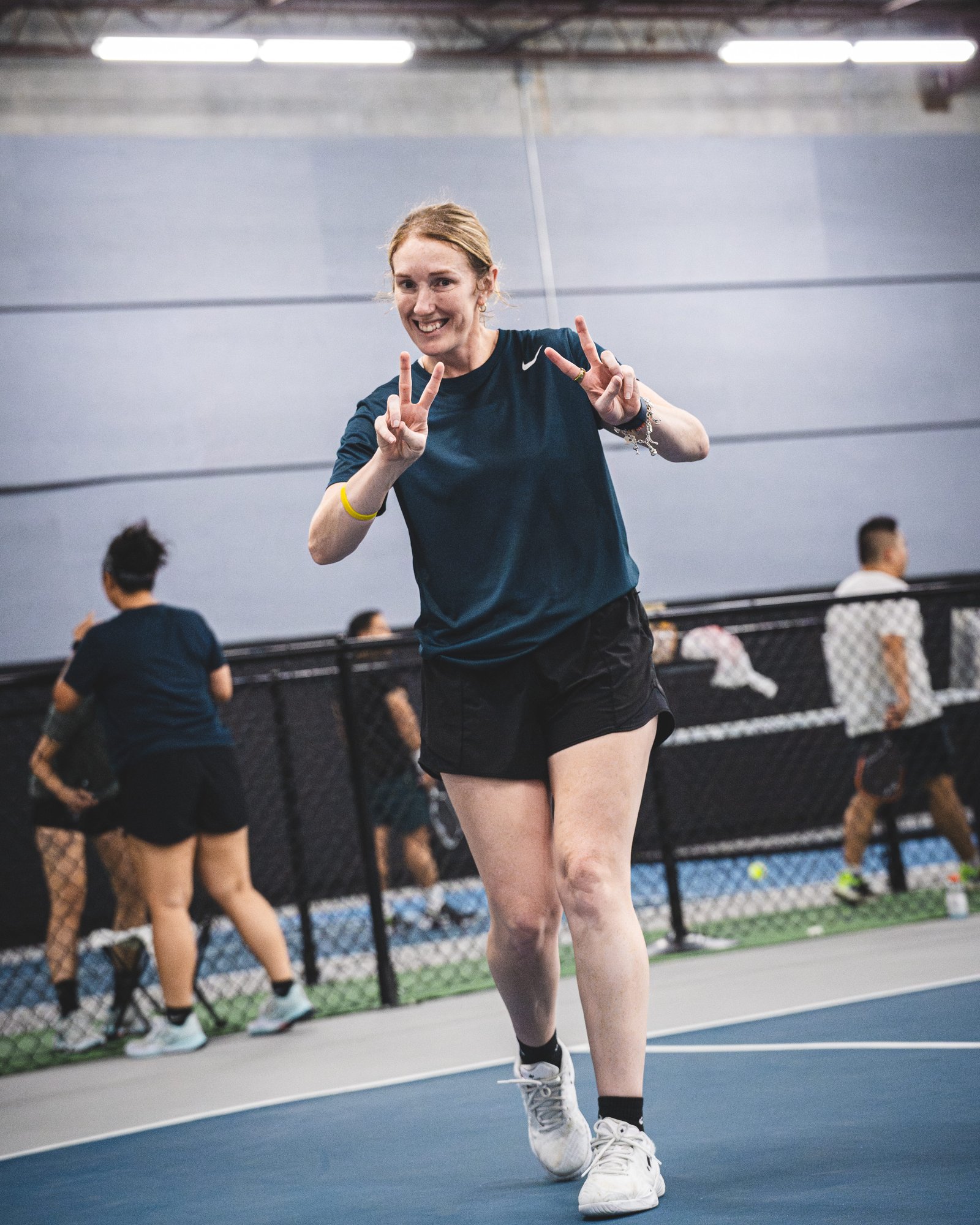
Tactical development follows, with attention to shot selection, court positioning, and partner coordination in doubles. The era pickleball program recognizes that in doubles, communication and role clarity are as decisive as technique. Coaches guide players through scenarios that demand quick adaptation—when to apply pressure, when to absorb it, and how to leverage the opponent’s weaknesses while preserving one’s own strategic strengths. The essence of good doubles play in this framework is not simply to win short points, but to dictate the tempo of the match and to force the opponents into decisions that favor the trainee.
A further dimension emerges as players begin to practice with more game-like context. Scrimmages, controlled tournament formats, and scheduled matches with players of varying styles provide the experiential learning needed to translate technique and strategy into real outcomes. The coaching team observes patterns—how often the player wins the net battle, how well they manage break points, and how they respond when a plan falls apart. These experiences reveal the practical limits of the training and offer concrete targets for the next cycle of practice. It is a cycle that respects the time needed to build muscle memory and the strategic insights required to apply that memory in pressure-filled moments.
At its core, the Era Pickleball coaching tracks are designed to be durable. They aim to cultivate a player who can self-assess and continue to progress even when a coach is not immediately present. The most successful athletes in this system establish a personal routine that echoes the center’s training philosophy. They carry a mental checklist into matches, monitor form during practice, and maintain a steady pace across a weekend tournament schedule. The true win is not just improved technique, but a broader transformation in how a player approaches competition, how they manage expectations, and how they recover when things do not go as planned.
In this framework, two lists help distill the practical takeaways for prospective participants. The first list outlines the core elements a coaching track typically covers, while the second highlights the indicators of progress that players and families can monitor over time.
-
Core elements of Era Pickleball coaching tracks 1) Initial assessment and goal alignment 2) Fundamental stability and contact quality 3) Technique blocks tied to tactical intent 4) Progressive match play and pressure scenarios 5) Reflective practice and progress documentation
-
Progress indicators players should expect 1) Increased rally duration with steady shot quality 2) More consistent dink depth and placement under pressure 3) Clearer decision-making and improved court awareness 4) Higher success rate in at-the-net transitions 5) Structured self-coaching habits and routine continuity
As with any athletic program, there are practical realities and limits to the coaching tracks. Some players arrive with a natural body memory for movement, others with an intellectual understanding of tactics but less comfortable in physical execution. The best experiences in Era Pickleball’s system come when a player embraces the iterative nature of improvement: a week of targeted work, a few matchups that test the new skill, and then another pass at refining technique and decision-making. It is a gentle but persistent process, and it’s designed to fit into a player’s life rather than demand that life orbit around the court.
It is also worth noting the boundary conditions of coaching. Not every track will be a perfect fit for every player. Some learners respond best to high-intensity, rapid-fire coaching sessions that push them in the moment. Others benefit more from slower, more reflective practice, where technical accuracy takes priority and tactical ideas are absorbed gradually. The Era Pickleball model is sensitive to these differences. Coaches are trained to tailor the pace and emphasis to the individual while maintaining a consistent framework across the center. This balance is hard to achieve, and it is where experience shows up most clearly. A veteran coach can read a room and know when to push and when to step back, when to scale up a drill and when to hold a line to preserve a player’s confidence.
The center’s approach also considers the broader ecosystem that surrounds coaching. The Era Pickleball environment includes access to video review, both on-court and via post-session analyses, to supplement in- person feedback. For players who want to dig deeper, the videotaping component offers a concrete way to observe patterns that may be elusive in the moment. Seeing a rally from a camera angle can reveal misalignments or timing issues that a verbal cue alone might miss. It also makes the learning process more transparent: players can rewatch, pause, and actively study the mechanics they are trying to internalize. This combination of live coaching and review tools is where the program gains extra traction for motivated learners.
Another practical advantage of Era Pickleball coaching tracks https://brookswuik145.sagecurrent.com/posts/era-pickleball-pickleball-classes-social-skill-building-and-drills is their focus on long-term health and sustainability. The center emphasizes proper warm-ups and cool-downs, joint-friendly movement patterns, and recovery strategies that help players maintain peak performance over time. The better players understand how to manage wear and tear, how to structure practice around rest and nutrition, and how to listen to their bodies when a particular drill begins to feel off. This attention to well-being is not a secondary concern. It is central to consistent progress across seasons, especially for players who aim to compete in more demanding formats or travel for tournaments.
Throughout the process, communication remains crucial. Coaches at erapickleball.com value ongoing dialogue with players and families. They maintain clarity about expectations, performance metrics, and the realistic timelines for improvement. They also encourage players to advocate for themselves, to ask questions when a technique feels unclear, and to bring up any concerns about the pace of progression. A coaching plan works best when it is a collaboration rather than a prescription handed down from above. At Era Pickleball, this collaborative spirit is embedded in the daily rhythm of practice, in the feedback sessions after matches, and in the friendly but disciplined tone that pervades the center.
In sum, coaching tracks at Era Pickleball offer more than a set of drills or a playlist of video tutorials. They provide a doorway into a deeper understanding of how to play pickleball well in real life. The structure, the feedback loops, and the emphasis on match experience illuminate a pathway from novice to confident competitor. The tracks are built to be practical, to respect the demands on busy lives, and to ensure that every hour on the court translates into real progress.
For players evaluating programs, there are a few actionable questions to consider. How does the center tailor tracks to individual goals and schedules? What does a typical week look like in terms of practice, video review, and match play? How are progress milestones defined, and how often are they reassessed? What is the role of families in supporting practice outside of scheduled sessions? How does coaching address both technique and strategy, rather than focusing narrowly on one at the expense of the other? Answers to these questions will reveal not only the quality of the coaching but also the level of thoughtful commitment behind the program.
Era Pickleball’s coaching tracks acknowledge a simple reality of sport: true improvement flows from deliberate, repeated practice aligned with meaningful competition. The center recognizes that players come with different starting points, different timelines for progress, and different reasons for playing. The coaching framework embraces that diversity without losing sight of universal fundamentals. It offers a durable approach to learning that can adapt as a player grows, and it keeps the door open for a breadth of pathways. Whether a player dreams of regional podiums, or simply wants to stay fit and enjoy social play with friends, the track system provides a respectful, evidence-based route to reach those goals.
In the end, a coaching track is more than an itinerary. It is a commitment to a method that respects both the science of movement and the art of competition. Era Pickleball has built a center where coaches work as partners with players, guiding them through stages of skill acquisition, strategic awareness, and mental preparation that many find surprisingly transformative. The result is not a single breakthrough moment but a sustained trajectory of growth, a trajectory that allows players to see themselves on the other side of the net with confidence, clarity, and a deeper love for the game.
If you are considering joining the coaching program at Era Pickleball, you are stepping into a space that treats improvement as a craft. The center has designed its tracks to be rigorous without being punitive, challenging without being unkind, and practical enough to fit into a busy life. The coaching team is seasoned and approachable, combining technical precision with a genuine desire to help players find the best version of themselves on the court. The result is a learning environment where effort meets structure, and progress follows.
The path is not linear for most players, and that is precisely why a thoughtful coaching framework matters. The best tracks respect that truth while maintaining a consistent focus on what matters most: functional, on-court improvement. When a player embraces the process, the gains compound. Small improvements accumulate into big outcomes. A player who commits to the coaching tracks at Era Pickleball can expect not just better technique, but a stronger sense of tactical fluency, a more dependable competitive mindset, and a durable approach to practice that keeps them moving forward over years, not just through a single season.
As you consider what Era Pickleball offers, think about the choices you make as a learner. Do you want a plan that compresses time and accelerates improvement, even if it requires a higher initial commitment? Or do you prefer a more gradual, degree-based approach that bats more evenly with a slower pace of progress? Both paths exist within the era pickleball ecosystem, and both can be extremely effective when guided by coaches who are aligned on goals, standards, and expectations.
Finally, there is the personal dimension. Players who engage with the coaching tracks often describe the experience as empowering. They begin to see more angles in rallies, more opportunities in transitions, and more control over their own development. The process becomes less about waiting for a breakthrough and more about building one step at a time, day after day, with a coach who understands how to translate practice into performance. In a sport that rewards rhythm, patience, and poise, the coaching tracks at erapickleball.com stand out as a thoughtful, practical gateway to sustained improvement. They are a reminder that a center can be more than a physical space with courts; it can be a community that builds players who feel capable when the score resets and the court lights come up again.